WELCOME TO LEARNER
Why LEARNER?

OUR RADIO
click here to listen Radio ganerbhuban
ALTERNATIVELY, if you want listen our Radio in android Mobile please download and install listen to my radio app from Google Play Store, and then enter ganerbhuban in search bar
Importance of Radio
technology have given people more ways to access an increasing amount of information. Local and international news can be read in the newspaper, listened to on radio, watched on television and found on cell-phones or online. For those with access to these options, a wealth of information is always readily available. In countries where free expression is suppressed, access to technology is expensive or illiteracy rates are high, radio continues to play an important role in information sharing.
Radio broadcasts can provide real-time information, broadcasted 24 hours a day to provide the most recent updates to listeners. Stations have the ability to reach across borders and become a source of information where reliable news is scarce. When access to the internet is blocked and phone lines are cut, people can still search the airwaves for trustworthy sources. Even electricity is not a necessity for battery operated and hand-cranked radios.
Radio Free Europe (RFE) was originally started during the Cold War with a single broadcast to communist Czechoslovakia out of New York City in 1950. Now, 60 years later, they broadcast in 21 countries using 28 different languages. Working in countries where an independent press has either been banned by the government or not well-established, RFE provides uncensored news to its listeners. Developments in radio technology continue to increase the range and clarity of broadcasts over farther distances, allowing listeners to tune in to stations in different countries and continents. Technological growth also means that the cost of broadcasting is lower, and the number of radio stations is increasing internationally.
The Economist reported in 2010 that world news stations such as the BBC have steadily been losing listeners as competition increases. In the 12 months prior to the August article, the BBC had lost eight million listeners. Other large news agencies such as Al Jazeera are moving into new markets and attracting listeners. However, large news agencies must compete with an increasing number of local stations. Community radio has the ability to provide news tailored to a smaller population, reporting on local issues that would not make international headlines.

Importance of internet Radio
In order to receive a broadcast from a terrestrial radio station, you must be relatively close to it. But for internet radio, there are no boundaries! Checking out the quality of sound, traditional radio is subject to interference and environmental factors. A slight movement of the terrestrial radio will cause annoying fluctuations. Internet radio is less compressed and has sound quality closer to a CD. With clarity, variety and so much more to offer, people are compelled to discard away their traditional radio and switch to online streaming!The outlook for radio has changed amazingly with the introduction of the spellbound internet and the streaming media technology.
Without withstanding the pain of downloading any station or channel, the internet radio allows its listeners to stream media continuously. It does not give us a chance to miss out on anything that is available on traditional broadcast radio stations, be it, news, weather, educational programs, sports, music, chats or talk shows. Internet radio has become a great source of entertainment. Listeners are acquainted with a plethora of choice. From classical to rock and everything that comes in between is readily available without having to wait for your favorite song. Now, a great number of websites provides portal through which any station of our choice can be accessed anytime, anywhere.
The variety of stations available on Internet radios as compared to the traditional ones is its greatest strength. If you have, say, 10 stations on your terrestrial radio, the internet radio gives you 1000. No matter how obscure, music is available for every taste and every genre. Another exciting quality of the internet radio is its continuous streaming without the interruption of advertisements. While terrestrial radio stations must broadcast a steady stream of commercials in order to gain revenue, internet radio stations have no commercials at all. Some internet radio stations are supported by donations and subscriptions.
Besides, you can listen to online radio whenever you want, the only condition being an active internet connection. Listen to masala Bollywood songs from any part of the world without having to worry about the required range.

our radio program list
this is sound testing time
history of radio
Radio owes its development to two other inventions: the telegraph and the telephone. All three technologies are closely related. Radio technology actually began as "wireless telegraphy."
The term "radio" can refer to either the electronic appliance that we listen with or the content playing from it. In any case, it all started with the discovery of "radio waves" or electromagnetic waves that have the capacity to transmit music, speech, pictures and other data invisibly through the air.
Many devices work by using electromagnetic waves including radio, microwaves, cordless phones, remote controlled toys, television broadcasts and more.
During the 1860s, Scottish physicist James Clerk Maxwell predicted the existence of radio waves. And in 1886, German physicist Heinrich Rudolph Hertz demonstrated that rapid variations of electric current could be projected into space in the form of radio waves, similar to those of light and heat.
In 1866, Mahlon Loomis, an American dentist, successfully demonstrated "wireless telegraphy." Loomis was able to make a meter connected to one kite cause another one to move. This marked the first known instance of wireless aerial communication.
Guglielmo Marconi, an Italian inventor, proved the feasibility of radio communication. He sent and received his first radio signal in Italy in 1895. By 1899, he flashed the first wireless signal across the English Channel and two years later received the letter "S," which was telegraphed from England to Newfoundland.
This was the first successful transatlantic radiotelegraph message in 1902.
Nikola Tesla
In addition to Marconi, two of his contemporaries, Nikola Tesla and Nathan Stufflefield, took out patents for wireless radio transmitters. Nikola Tesla is now credited with being the first person to patent radio technology.
The Supreme Court overturned Marconi's patent in 1943 in favor of Tesla.
Radiotelegraph and Spark-Gap Transmitters
Radio-telegraphy is the sending by radio waves the same dot-dash message (morse code) used in a telegraph. Transmitters at that time were called spark-gap machines. It was developed mainly for ship-to-shore and ship-to-ship communication. This was a way of communicating between two points. However, it was not public radio broadcasting as we know it today.
Wireless signals proved effective in communication for rescue work whenever a sea disaster occurred. A number of ocean liners even installed wireless equipment. In 1899, the United States Army established wireless communications with a lightship off Fire Island, New York. Two years later the Navy adopted a wireless system. Up until then, the Navy had been using visual signaling and homing pigeons for communication.
In 1901, radiotelegraph service was instituted between five Hawaiian Islands. By 1903, a Marconi station located in Wellfleet, Massachusetts carried an exchange or greetings between President Theodore Roosevelt and King Edward VII. In 1905, the naval battle of Port Arthur in the Russo-Japanese war was reported by wireless.
And in 1906, the U.S. Weather Bureau experimented with radiotelegraphy to speed up notice of weather conditions.
In 1909, Robert E. Peary, an arctic explorer, radiotelegraphed "I found the Pole." In 1910, Marconi opened regular American-European radiotelegraph service, which several months later enabled an escaped British murderer to be apprehended on the high seas. In 1912, the first transpacific radiotelegraph service linked San Francisco with Hawaii.
Improvements to Radio Transmitters
Overseas radiotelegraph service developed slowly, primarily because the initial radiotelegraph transmitter discharged electricity within the circuit and between the electrodes was unstable and caused a high amount of interference. The Alexanderson high-frequency alternator and the De Forest tube resolved many of these early technical problems.
Lee DeForest - AM Radio
Lee Deforest invented space telegraphy, the triode amplifier and the Audion. In the early 1900s, the big requirement for further development of radio was an efficient and delicate detector of electromagnetic radiation. De Forest provided that detector. It made it possible to amplify the radio frequency signal picked up by the antenna before application to the receiver detector. This meant that much weaker signals could be utilized than had previously been possible. De Forest was also the person who first used the word "radio."
The result of Lee DeForest's work was the invention of amplitude-modulated or AM radio that allowed for a multitude of radio stations. The earlier spark-gap transmitters did not allow for this.
Military Use and Patent Control
When the United States entered the first world war in 1917, all radio development was controlled by the U.S. Navy to prevent its possible use by enemy spies. The U.S. government took over control of all patents related to radio technology.
In 1919, after the government released its control of all patents, the Radio Corporation of America (RCA) was established with the purpose of distributing control of the radio patents that had been restricted during the war.
Radio Speaks
The first time the human voice was transmitted by radio is debateable. Claims to that distinction include the phrase, "Hello Rainey," which was spoken by Nathan B. Stubblefield to a test partner near Murray, Kentucky in 1892 as well as an experimental program of talk and music by Reginald A. Fessenden in 1906 that was heard by radio-equipped ships within several hundred miles.
Reginald A. Fessenden
Canadian Reginald A. Fessenden is best known for his invention of the modulation of radio waves and the fathometer. Fessenden worked as a chemist for Thomas Edison during the 1880s and later for Westinghouse. Fessenden started his own company, where he invented the modulation of radio waves known as the "heterodyne principle," which allowed the reception and transmission on the same aerial without interference.
True Broadcasting Begins
In 1915, speech was first transmitted across the continent from New York City to San Francisco and across the Atlantic Ocean, from Naval radio station NAA at Arlington, Virginia to the Eiffel Tower in Paris.
On November 2, 1920, Westinghouse's KDKA-Pittsburgh broadcasted the Harding-Cox election returns and began a daily schedule of radio programs.
The first ship-to-shore two way radio conversation occurred in 1922, between Deal Beach, New Jersey and the S.S. America, stationed 400 miles at sea. However, it was not until 1929 that high seas public radiotelephone service was inaugurated.
At that time, telephone contact could be made only with ships within 1,500 miles of shore. Today, there is the ability to telephone nearly every large ship wherever it may be on the globe.
In 1927, Commercial radiotelephony linking North America with Europe was opened. In 1935 the first telephone call was made around the world using a combination of wire and radio circuits.
FM Radio
Edwin Howard Armstrong invented frequency-modulated or FM radio in 1933. FM improved the audio signal of radio by controlling the noise static caused by electrical equipment and the earth's atmosphere. Until 1936, all American transatlantic telephone communication had to be routed through England. That year, a direct radiotelephone circuit was opened to Paris. Telephone connection by radio and cable is now accessible with 187 foreign points.
Radio technology has grown significantly since its early development. In 1947, Bell Labs scientists invented the transistor. In 1954, a then small Japanese company called Sony introduced the transistor radio.
FM Antenna System
In 1965, the first Master FM Antenna system in the world designed to allow individual FM stations to broadcast simultaneously from one source was erected on the Empire State Building in New York city.
.
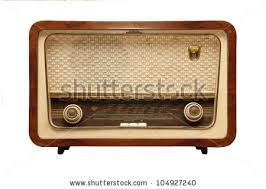



I hope this message finds you well. I'm honored to invite you to join at Radio ganerbhuban.. I am a huge fan of [your work] – and the way you [are so impressive at that thing you do] – and would be so excited if you would join us.
welearner
© Copyright learner 2017 All rights reserved
